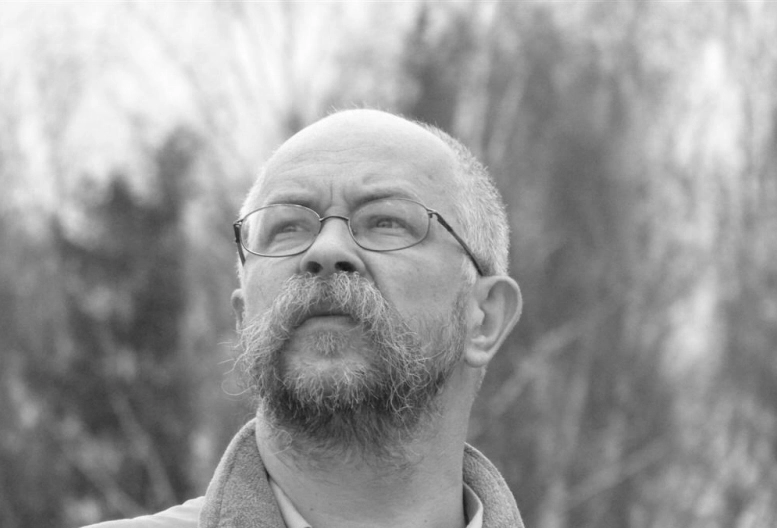
In Memory of Dr Māris Strazds

Interesting news, videos, links, and stories about Black Storks from around the world.
marika.solo
Site Admin
Posts: 29568
Joined: 29 Sep 2021, 09:38

In Memory of Dr Māris Strazds

Post by marika.solo »

In Memory of Dr Māris Strazds (some posts are before in the thread small talking or in other thread) IN PREPARATION

LATVIA

Today, 2 November 2026, Māris Strazds passed away.

Although we never had the chance to meet in person, Māris was one of those people who helped me better understand the world of Black Storks, a world I have been observing and exploring with deep interest for the past ten years.

He always kindly and generously answered my questions, sharing his knowledge and experience. I will be forever grateful for that.
Sometimes people come into our lives without us ever meeting them face to face, yet they leave a profound mark on our hearts.

Māris, thank you for everything you shared, for your dedication to Black Storks, and for the legacy you leave behind. You will be remembered. Rest in peace. 🖤

information: https://www.facebook.com/LOB.lv/posts/p ... pxCVqHCaVl, big thx to Liz for hint
marika.solo
Site Admin
Posts: 29568
Joined: 29 Sep 2021, 09:38

Re: In Memory of Dr Māris Strazds

Post by marika.solo »

https://www.facebook.com/ruslans.matroz ... qW65yS7gal
02.11.2026

Māris Strazds (21.06.1960 – 02.11.2026) has taken his final flight, leaving an indelible mark on Latvian ornithology.

The final farewell to Māris Strazds will take place on Saturday, 7 November, at 10.00 am in the Grand Farewell Hall of the Riga Crematorium, Meža Cemetery, 3A Varoņu Street, Riga.

-----
Māris Strazds (1960–2026)

Image
Foto: motacilla.lv

(source: https://lasi.lv/par-svarigo/latvija/in- ... juma.50347)
marika.solo
Site Admin
Posts: 29568
Joined: 29 Sep 2021, 09:38

Re: In Memory of Dr Māris Strazds

Post by marika.solo »

Māris Strazds (1960–2026) – Remembering an Exceptional Black Stork Researcher

Following the death of Māris Strazds, the distinguished Latvian ornithologist and internationally recognised Black Stork specialist, I would like to share some information about his life and work, drawing on two articles published in Latvia.

Māris devoted more than four decades to the study and conservation of the Black Stork. His contribution extended well beyond ornithological research: he helped develop Latvian bird conservation, encouraged public interest in wildlife and consistently spoke up for the protection of forests and their inhabitants.

The following are two independently written accounts based on information published in the Latvian media. They are intended to introduce Māris and his remarkable contribution to readers who may not have known him or had access to the original Latvian publications.

1. Remembering Māris Strazds – a life devoted to birds and nature

Māris Strazds was one of the important figures in the development of modern Latvian ornithology. His involvement in organised bird conservation began early: he was among the founders of the Latvian Ornithological Society (LOB) in 1985 and became its first director. He subsequently led the organisation from 1994 to 2002, a significant period in its development.

His scientific interests were not confined to a single species. He contributed to the first atlas of breeding birds in Latvia and took an active interest in the conservation of forests, habitats and threatened wildlife.

Nevertheless, the Black Stork became the defining subject of his professional life. His long-term research helped build a much deeper understanding of the ecological needs of this elusive forest bird and the conditions essential for its survival. He completed his doctoral research on the species, defending his dissertation in 2011.

Māris was also an effective communicator who understood the importance of sharing scientific knowledge beyond academic circles. His work helped bring the natural world closer to birdwatchers and other people interested in wildlife.

He regarded himself as an advocate for birds and nature – a role that involved not only studying wildlife but also speaking up for its protection. His legacy therefore encompasses both scientific knowledge and a lasting contribution to nature conservation in Latvia.

Based on information published by the Latvian Ornithological Society.

Source: Viesturs Ķerus, No Māra Strazda atvadoties, Latvijas Ornitoloģijas biedrība, 2 November 2026.

Read the original article in Latvian

2. Māris Strazds – his final flight

Māris Strazds was not only a leading Black Stork researcher but also a person whose work brought the lives of these remarkable birds to the attention of a much wider audience.

Colleagues and friends remember him as a knowledgeable, determined and approachable individual, with strong leadership abilities, a pronounced sense of justice and a wonderful sense of humour. He had been organising and leading birdwatching groups since 1989 and played an important part in the development of the Latvian Ornithological Society.

His international reputation was built on more than forty years of dedicated Black Stork research. Among his most ambitious undertakings was an expedition from Latvia towards Africa, designed to investigate the birds' migration routes, wintering areas and places where they stopped along the way.

He was also among the early pioneers of satellite tracking in Latvian Black Stork research. The transmitters made it possible to follow individual birds over enormous distances and to learn more about the hazards they encountered. Among the birds whose journeys attracted public attention were three females known as Kate, Feja and Mare. Their stories helped people appreciate that migration is not simply an extraordinary natural phenomenon, but also a demanding and sometimes fatal undertaking.

Māris's research highlighted several major pressures affecting Black Stork populations: disturbance associated with forestry, the loss or scarcity of suitable feeding areas, predation and environmental contamination, including residues of DDT detected in eggs.

He had been drawing attention to the consequences of intensive clear-felling since the late 1990s. For him, the future of the Black Stork was inseparable from the condition of the forests in which it breeds and feeds.

One particularly telling example of his commitment occurred at Rucava. An ancient stand of pine trees, including a site associated with an old Black Stork nest, was felled on state-managed land. Māris personally removed a cross-section of one of the felled trunks so that its age could be examined scientifically. The tree was believed to have been growing since approximately 1649.

This was more than an attempt to establish the age of an old tree. It was also part of his effort to document what had been lost and to seek accountability for the destruction of an exceptionally valuable forest habitat.

Through his research, fieldwork and public engagement, Māris helped reveal how closely the survival of the Black Stork is connected to the health and natural structure of our forests. His work leaves an important legacy for everyone concerned with the future of this species.

Based on information published by Latvijas Mediji.

Source: Māris Puķītis, In memoriam: Ornitologs Māris Strazds devies pēdējā lidojumā, Latvijas Mediji, 2 November 2026, 15:30.

Read the original article in Latvian

A final thought

Māris's work reminds us that protecting a species means understanding far more than its biology. It means protecting the places where it lives, recognising the dangers it faces and being prepared to speak up when those places are threatened.

For those of us who follow and admire the Black Stork, his contribution will remain an important part of the knowledge and understanding on which future conservation efforts depend.

He will be remembered through the birds he studied, the knowledge he shared and the forests he fought to protect.
marika.solo
Site Admin
Posts: 29568
Joined: 29 Sep 2021, 09:38

Re: In Memory of Dr Māris Strazds

Post by marika.solo »

Kristīne Garklāva 3 November

https://www.facebook.com/reel/1340182282521609 REEL
(AI translation)

Yesterday, I looked up at the sky and wondered whether Māris was already somewhere up there among them – the great love of his life… the black storks.

As recently as the end of August, we were jumping into the car in the early hours of the morning, heading off on a woodland expedition to check the nests. And, as always, the long hours in the car simply flew by, because we would talk and talk… about black storks, life, love and, yes, even exclusive food recipes, because Māris was a fantastic cook.

Just as Māris has left an enormous legacy in the world of ornithology and nature conservation, both in Latvia and beyond, through his research and the vast wealth of data he leaves behind, he has also been (and remains) an incredibly important person in my life.

Together, we made two films about black storks and shared countless stories… We tramped through wild, remote forests, and hundreds of ticks found their way onto Māris – eventually, we stopped counting.

All with the hope that black storks will always have a home in Latvia, and that there will always be ancient, natural forests here where they can nest.

Māris, I so dearly hope that someone will carry on your work…

Thank you for teaching me to do things properly, with genuine dedication and heart. Thank you for sharing so much knowledge, which has helped me understand and love nature even more. Thank you for the laughter that brought tears to our eyes, and for your dark humour when the days seemed impossibly long.

Thank you, from me and from the black storks…

My deepest condolences to Māris's girls and all his loved ones.

You will be so very deeply missed…
marika.solo
Site Admin
Posts: 29568
Joined: 29 Sep 2021, 09:38

Re: In Memory of Dr Māris Strazds

Post by marika.solo »

Together with director Māris Maskalāns and producer Sandijs Semjonovs, Kristīne Garklāva co-created two documentaries about black storks and Strazds's 40 years of research:

- the second film: Melnā stārķa kungs (Mr. Black Stork, 2020)
A 25-minute documentary made for the Latvian Television (LTV) series Latvijas kods. It follows Māris Strazds - nicknamed "Mr. Black Stork" by colleagues - and examines his relationship with Latvia's elusive black storks and the threats facing their forest habitats.

The elusive black stork and the man who knows it: an online documentary
by Skuba films - LATVIA, 2021 25:27

Mr. Black Stork or Maris Strazds has been studying these beautiful birds and their behavior for forty years. It’s interesting to note that his love and relationship with these beautiful birds is longer than his relationship with his wife.
More than half of his life following black storks, Māris is aware that due to deforestation, the number of these birds in Latvia is rapidly approaching zero.


btw. first info already here viewtopic.php?p=286#p286
marika.solo
Site Admin
Posts: 29568
Joined: 29 Sep 2021, 09:38

Re: In Memory of Dr Māris Strazds

Post by marika.solo »

- the first film: Melnais stārķis. Dzīvības lidojums (Black Stork. Flight of Life, 2013)
An earlier documentary and multi-episode video series following Strazds and researchers as they track black storks, equip them with satellite transmitters, and study their migration routes from Latvia to their wintering grounds in Africa.

The project was spearheaded by Dr. Māris Strazds of the University of Latvia's Institute of Biology and the Latvian Ornithological Society (LOB).

Summary & Details
• Concept: The 2013 documentary project tracks endangered Latvian black storks (Ciconia nigra) fitted with GPS transmitters to study their population decline and migration routes to Africa.
• Format: It was released in 2013 as a multi-part web series of short episodes, followed by a compiled television documentary film in March 2014. (The project was documented in a 14-part short video series released starting in July 2013 on Latvian news portals like TVNET and Apollo, as well as the official Melnais stārķis. Dzīvības lidojums YouTube channel. Following the initial tracking season, a full documentary film summarizing the birds' journeys and fates aired on Latvian television (LNT) in March 2014.)
• Language: The narration and interviews are in Latvian, though select segments feature brief English interviews with international ornithologists

28 videos "Melnais starkis Dzivibas lidojums" https://www.youtube.com/channel/UCy_2wq ... 6zw/videos;
-btw. first info already here viewtopic.php?p=379#p379

Image
20.03.2014 https://www.facebook.com/DzivibasLidoju ... cale=ms_MY

- Projekta «Melnais stārķis. Dzīvības lidojums» 1. sērija: https://www.apollo.lv/5347593/projekta- ... s-1-serija (video - 7:50)
- Projekta «Melnais stārķis. Dzīvības lidojums» 2. sērija https://www.tvnet.lv/6302756/projekta-m ... s-2-serija (video - 4:05)
- Melnais stārķis: dzīvības lidojums. 3. sērija https://www.tvnet.lv/6302256/melnais-st ... s-3-serija (video - 4:56)
marika.solo
Site Admin
Posts: 29568
Joined: 29 Sep 2021, 09:38

Re: In Memory of Dr Māris Strazds

Post by marika.solo »

IN PREPARATION

Black stork population declines in Latvia
https://eng.lsm.lv/article/society/envi ... C8K06WlfMw
November 15, 2024, 7:25
Authors: LSM English (Latvian Public Media)

Protecting mature trees and rivers: a lifeline for the future of Black Storks and many other birds
https://www.birdpartners.org/post/seein ... the-future
Writer: IBCP
Jul 13, 2021, Updated: Aug 7, 2021
by Māris Strazds, PhD
marika.solo
Site Admin
Posts: 29568
Joined: 29 Sep 2021, 09:38

Re: In Memory of Dr Māris Strazds

Post by marika.solo »

IN PREPARATION

Doctoral Dissertation (2011): Authored "Conservation Ecology of the Black Stork in Latvia", analysing breeding performance across 1,634 nests from 1979 to 2010 and identifying key drivers of nest abandonment

now: https://www.researchgate.net/profile/Maris-Strazds
next: https://independent.academia.edu/MarisStrazds, https://scholar.google.sk/scholar?start ... 5&as_vis=1 and other sources

2026

Article Scacco, Martina & Smaers, Jeroen & Werber, Yuval & Aghababyan, Karen & Arrondo, Eneko & Aschenborn, Ortwin & Batbayar, Nyambayar & Bauer, Hans & Becciu, Paolo & Boiko, D. & Botha, Andre & Blas, Julio & Cole, Nik & Cortés-Avizanda, Ainara & Cruz, Sebastián & Curk, Teja & Davies, John & Dechmann, Dina & Dilley, Ben & Shepard, Emily. (2026). Airflows redefine the cost of aerial transport in the wild. Science. 394. 347-352. 10.1126/science.aee6550.

Article Zacs, Dzintars & Strazds, Maris & Perkons, Ingus & Bartkevics, V.. (2026). Occurrence of legacy, emerging, and novel brominated and chlorinated flame retardants in eggs of Black Stork (Ciconia nigra) from Eastern Europe. Chemosphere. 397. 144885. 10.1016/j.chemosphere.2026.144885.

2024

Article Rimsa, Antonija & Abola, Anda & Veilande, Rita & Brike, Zanda & Revalde, Gita & Skudra, Atis & Strazds, Maris. (2024). The Characterisation of Mercury Pollution in the Faeces of Baltic Region Breeding Black Storks. Journal of Hazardous Materials Advances. 16. 100499. 10.1016/j.hazadv.2024.100499.

Article Väli, Ülo & Strazds, Maris & Kaldma, Katrin & Treinys, Rimgaudas. (2024). Low juvenile survival threatens the Black Stork Ciconia nigra in northern Europe. Bird Conservation International. 34. 10.1017/S0959270924000042.

Article Serratosa, Juan & Rotics, Shay & Santangeli, Andrea & Butchart, Stuart & Cano-Alonso, Luis & Tellería, Jose & Kemp, Ryno & Nicholas, Aaron & Kalvāns, Aigars & Galarza, A. & Franco, Aldina & Andreotti, Alessandro & Kirschel, Alexander & Ngari, Alex & Soutullo, Alvaro & Bermejo-Bermejo, Ana & Botha, Andre & Ferri, Andrea & Krejčí, Šimon. (2024). Tracking data highlight the importance of human-induced mortality for large migratory birds at a flyway scale. Biological Conservation. 193. 110525.

Serratosa, J., Oppel, S., Rotics, S., Santangeli, A., Butchart, S. H., Cano-Alonso, L. S., ... & Nygård, T. (2024). Tracking data highlight the importance of human-induced mortality for large migratory birds at a flyway scale. Biological Conservation, 293, 110525.

Presentation Arcilla, Nico & Strazds, Maris. (2024). Seeing the forest for the birds: Ten principles for bird-friendly forestry.

2023

Article Arcilla, Nico & Strazds, Maris. (2023). Ten Principles for Bird-Friendly Forestry: Conservation Approaches in Natural Forests Used for Timber Production. Birds. 4. 245-261. 10.3390/birds4020021.

2022

Conference Paper Abola, Anda & Brike, Z. & Revalde, Gita & Veilande, R. & Rancane, K. & Skudra, A. & Strazds, Maris. (2022). Determination of Hg in Biological Samples of Black Storks by Zeeman Atomic Absorption Spectrometry. JW2A.20. 10.1364/3D.2022.JW2A.20.
marika.solo
Site Admin
Posts: 29568
Joined: 29 Sep 2021, 09:38

Re: In Memory of Dr Māris Strazds

Post by marika.solo »

2021

Article Abola, Anda & Strazds, Maris & Gavare, Zanda & Veilande, R.. (2021). ASSESSING MERCURY POLLUTION USING BLACK STORK EGGSHELLS. ENVIRONMENT. TECHNOLOGIES. RESOURCES. Proceedings of the International Scientific and Practical Conference. 1. 12. 10.17770/etr2021vol1.6528.

2020

Chapter Cano-Alonso, Luis & Strazds, Maris. (2020). Cano Alonso, L.S. & Strazds, M. (2020). Ciconia nigra Black Stork. In: Keller, V., Herrando, S., Voříšek, P., Franch, M., Kipson, M., Milanesi, P., Martí, D., Anton, M., Klvaňová, A., Kalyakin, M.V., Bauer, H.-G. & Foppen, R.P.B. (2020). European Breeding Bird Atlas 2: Distribution, Abundance and Change. European Bird Census Council & Lynx Edicions, Barcelona. ISBN: 978-3-85949-013-0.

2019

Preprint Cano-Alonso, Luis & Strazds, Maris & Tamás, Enikő Anna. (2019). VII INTERNATIONAL CONFERENCE ON BLACK STORK CICONIA NIGRA Conference Plenary Discussion, Conclusions and Recommendations of the VII International Conference on Black Stork Ciconia nigra (Doñana National Park, Spain). 10.13140/RG.2.2.17442.68806.

Maciej Kamiński, Jerzy Bańbura, Bartosz Janic, Katrin Kaldma, Annika Konovalov, Lidia Marszał, Piotr Minias, Ülo Väli, Piotr Zieliński,
Brood sex ratio and nestling physiological condition as indicators of the influence of weather conditions on breeding black storks Ciconia nigra, Ecological Indicators, Volume 104, 2019, Pages 313-320, ISSN 1470-160X, https://doi.org/10.1016/j.ecolind.2019.04.086.

2018

Conference Paper Arcilla, Nico & Strazds, Maris & Su, Shan. (2018). Conservation from the bottom up: drawing inspiration from human-nature connections. 10.17011/conference/eccb2018/107878.
Post Reply

Return to “Miscellaneous”