Karula National Park 2/ Must toonekurg 4
-
marika.solo
- Site Admin
- Posts: 27187
- Joined: 29 Sep 2021, 09:38
Re: Karula National Park 2/ Must toonekurg 4
youtube cleaned the chat
-
marika.solo
- Site Admin
- Posts: 27187
- Joined: 29 Sep 2021, 09:38
Re: Karula National Park 2/ Must toonekurg 4
previous post (01.06) viewtopic.php?p=60710#p60710
next post (03.07)
July 02
Hello everyone
CHICK () +
() +
- 1st chick: 42 days old (hatched in the night 21./22.05)
- 2nd chick: 42 days old (hatched in the night 21./22.05)
- 3rd chick: 38 days old (hatched on 23. 05)
- 4th: on 24. 05; brood reduction by female on 28.05 - 4 days old
- one chick, Bonus 2, adopted on 18.06
- info about the 2nd saved chick: viewtopic.php?p=59858#p59858
Stork chicks grow exponentially. 90 days in the nest is like 18-21 years for humans. This means that 1 day in the nest is like almost 3 months for a human child. That is why their transformation is so amazing and fast.
RINGING day
next post (03.07)
July 02
Hello everyone
CHICK
 () +
() + - 1st chick: 42 days old (hatched in the night 21./22.05)
- 2nd chick: 42 days old (hatched in the night 21./22.05)
- 3rd chick: 38 days old (hatched on 23. 05)
- 4th: on 24. 05; brood reduction by female on 28.05 - 4 days old
- one chick, Bonus 2, adopted on 18.06
- info about the 2nd saved chick: viewtopic.php?p=59858#p59858
Stork chicks grow exponentially. 90 days in the nest is like 18-21 years for humans. This means that 1 day in the nest is like almost 3 months for a human child. That is why their transformation is so amazing and fast.
RINGING day
-
marika.solo
- Site Admin
- Posts: 27187
- Joined: 29 Sep 2021, 09:38
Re: Karula National Park 2/ Must toonekurg 4
youtube chat info - thx to everyone, especially to @СветланаКлюева-н6у 
English translation only from now on – assisted by Gemini
YouTube comments do not reflect all nest events throughout the day, including chick feedings; therefore, the the log can be unfortunately incomplete.
Nest Activity Log – 01/07/2026
03:30 – 03:31 – Technical screen.
03:35:36 – The camera switched to day vision.
06:21:35 – The male parent arrived at the nest.
06:21:35 – 06:22:00 – Feeding by the male parent, but the type of food was not visible. The male parent flew away at 06:22:00.
06:30 – It started to rain.
07:28 – 11:31 – Technical screen.
12:40 – One of the chicks (the foster/adopted chick) cast a pellet.
13:20:48 – The male parent arrived at the nest.
13:20:48 – Feeding. The male parent fed the chicks fish and flew away at 13:21:23.
13:31 – 14:37 – Stream offline (no recording available).
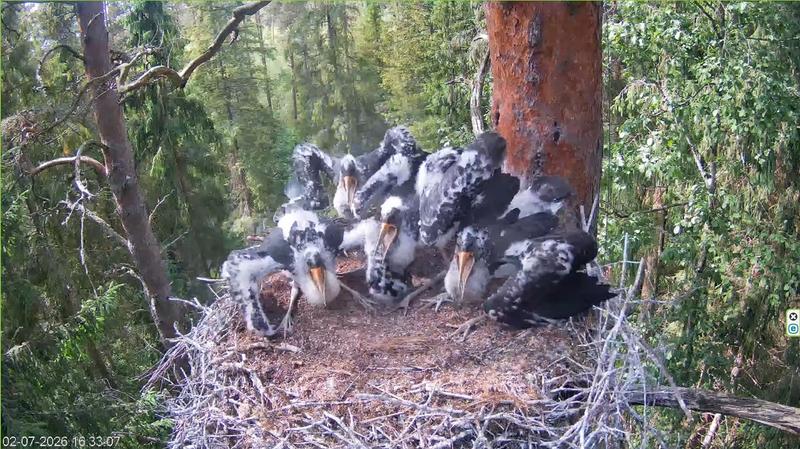
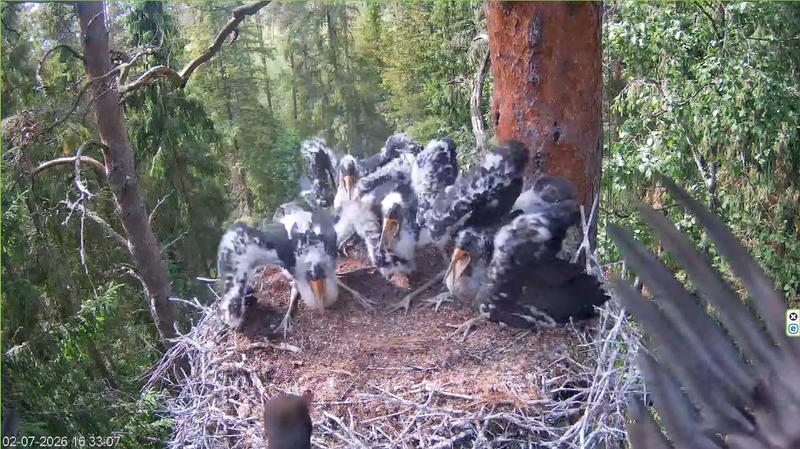
16:33:08 – The female parent arrived at the nest.
16:33:08 – Feeding. The female parent fed the chicks small food items and flew away at 16:33:20.
19:06:53 – The male parent arrived at the nest.
19:06:53 – Feeding. The male parent regurgitated food, and the chicks quickly collected it. The male parent flew away at 19:07:02.
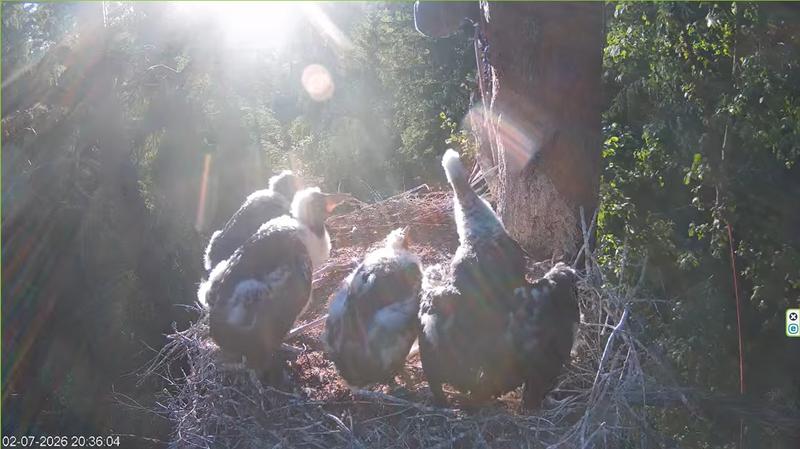
20:18 – The ornithologist arrived at the nest site. The chicks looked down from the nest, tracking the approach.
20:35 – The ornithologist climbed up and appeared at the nest.
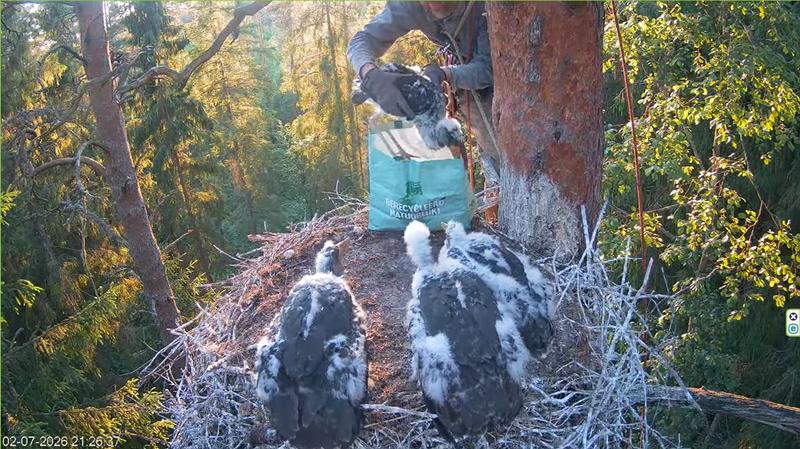
20:39 – The ornithologist placed the first chick into a green bag to take it down for ringing and weighing.
20:46 – The first chick was safely returned to the nest in the green bag.
20:47 – The ornithologist placed the second chick into the bag.
20:59 – The second chick was returned to the nest, and the third chick was placed into the bag.
21:12 – The third chick was returned to the nest.
21:14 – The ornithologist placed the fourth chick into the bag.
21:17 – The ornithologist carefully took feather samples from the back of the first two chicks for DNA testing.
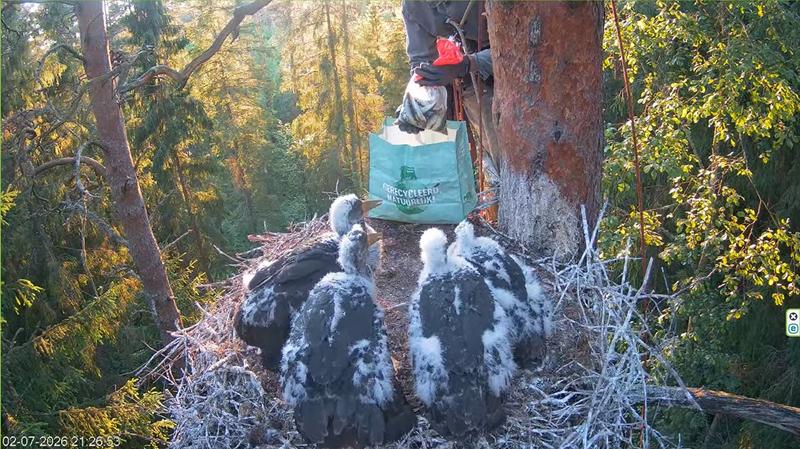
21:27 – The fourth chick was returned to the nest along with a bag of fish provided by the ornithology team as a gift. The chicks immediately began eating the fish.
General Nest Notes
Ringing Event and Chick Observations
All four chicks were successfully ringed. Each chick received two rings, except for the adopted chick which already had one ring and was only weighed during the process.
Due to the high stress of the ringing procedure, saliva was dripping from the bills of the young storks. The chicks displayed a very defensive attitude, hissing aggressively.
During the procedures on the ground, each chick was carefully weighed. The team noted that the large chicks were heavy and barely fit into the transport bag.
The ornithologist carefully collected feather samples from the chicks for DNA analysis, taking strict precautions not to contaminate the samples with human skin contact.
The ringing event was fully successful with no injuries to the birds or the team. The large amount of fresh fish left by the team quickly distracted the chicks from the stress.
English translation only from now on – assisted by Gemini
YouTube comments do not reflect all nest events throughout the day, including chick feedings; therefore, the the log can be unfortunately incomplete.
Nest Activity Log – 01/07/2026
03:30 – 03:31 – Technical screen.
03:35:36 – The camera switched to day vision.
06:21:35 – The male parent arrived at the nest.
06:21:35 – 06:22:00 – Feeding by the male parent, but the type of food was not visible. The male parent flew away at 06:22:00.
06:30 – It started to rain.
07:28 – 11:31 – Technical screen.
12:40 – One of the chicks (the foster/adopted chick) cast a pellet.
13:20:48 – The male parent arrived at the nest.
13:20:48 – Feeding. The male parent fed the chicks fish and flew away at 13:21:23.
13:31 – 14:37 – Stream offline (no recording available).
16:33:08 – The female parent arrived at the nest.
16:33:08 – Feeding. The female parent fed the chicks small food items and flew away at 16:33:20.
19:06:53 – The male parent arrived at the nest.
19:06:53 – Feeding. The male parent regurgitated food, and the chicks quickly collected it. The male parent flew away at 19:07:02.
20:18 – The ornithologist arrived at the nest site. The chicks looked down from the nest, tracking the approach.
20:35 – The ornithologist climbed up and appeared at the nest.
20:39 – The ornithologist placed the first chick into a green bag to take it down for ringing and weighing.
20:46 – The first chick was safely returned to the nest in the green bag.
20:47 – The ornithologist placed the second chick into the bag.
20:59 – The second chick was returned to the nest, and the third chick was placed into the bag.
21:12 – The third chick was returned to the nest.
21:14 – The ornithologist placed the fourth chick into the bag.
21:17 – The ornithologist carefully took feather samples from the back of the first two chicks for DNA testing.
21:27 – The fourth chick was returned to the nest along with a bag of fish provided by the ornithology team as a gift. The chicks immediately began eating the fish.
General Nest Notes
Ringing Event and Chick Observations
All four chicks were successfully ringed. Each chick received two rings, except for the adopted chick which already had one ring and was only weighed during the process.
Due to the high stress of the ringing procedure, saliva was dripping from the bills of the young storks. The chicks displayed a very defensive attitude, hissing aggressively.
During the procedures on the ground, each chick was carefully weighed. The team noted that the large chicks were heavy and barely fit into the transport bag.
The ornithologist carefully collected feather samples from the chicks for DNA analysis, taking strict precautions not to contaminate the samples with human skin contact.
The ringing event was fully successful with no injuries to the birds or the team. The large amount of fresh fish left by the team quickly distracted the chicks from the stress.
-
marika.solo
- Site Admin
- Posts: 27187
- Joined: 29 Sep 2021, 09:38
Re: Karula National Park 2/ Must toonekurg 4
20:36:04
20:39:11
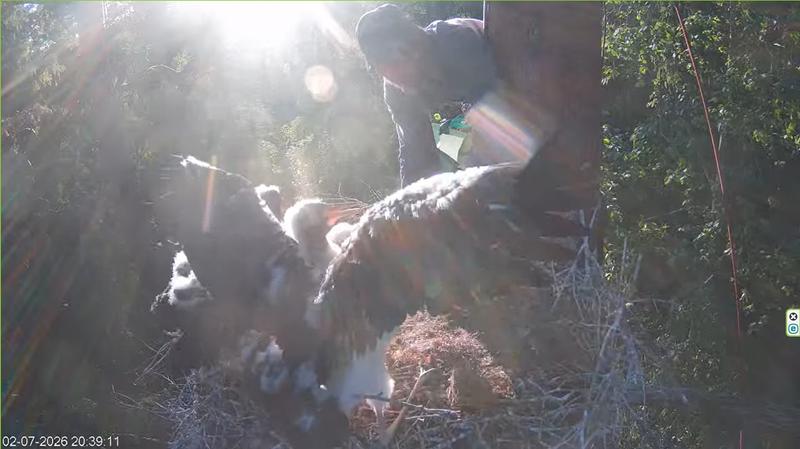
20:39:11
-
marika.solo
- Site Admin
- Posts: 27187
- Joined: 29 Sep 2021, 09:38
Re: Karula National Park 2/ Must toonekurg 4
21:19:44
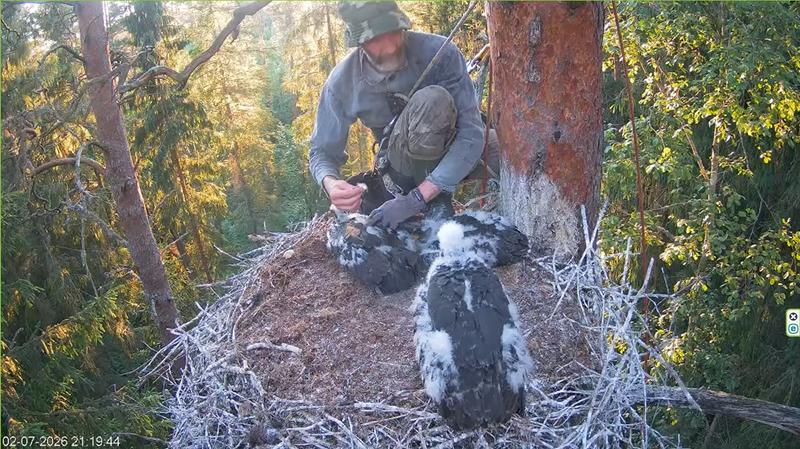
21:26:37
21:26:53 (and a lot of fish)
21:26:37
21:26:53 (and a lot of fish)
-
marika.solo
- Site Admin
- Posts: 27187
- Joined: 29 Sep 2021, 09:38
Re: Karula National Park 2/ Must toonekurg 4
21:30:30 (Mr. Urmas Sellis)
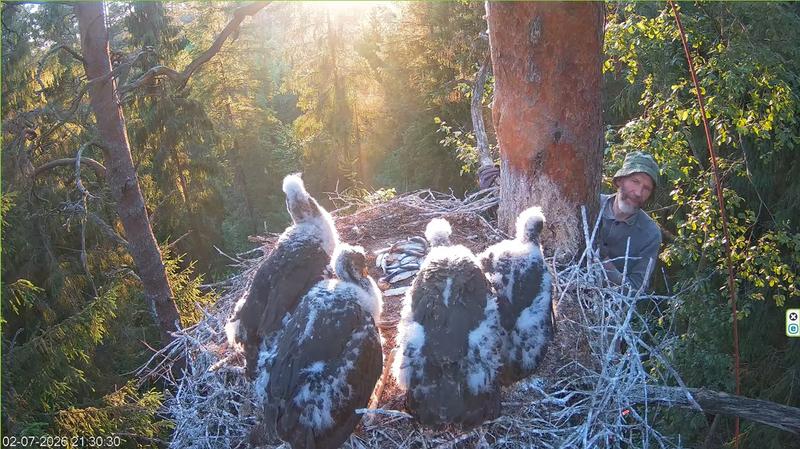
Out of the four chicks, practically only the two older ones ate all the fish.
22:03:38
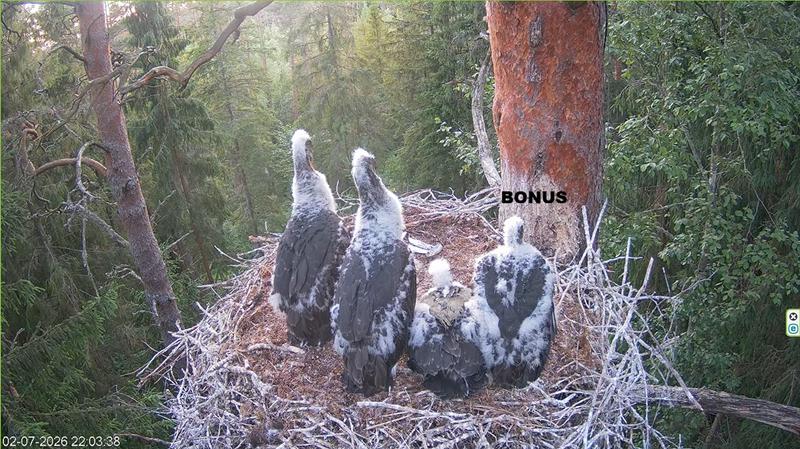
22:04:26 - 23:14:13 break in the broadcast - we didn't see who ate the rest of the fish
23:17:21
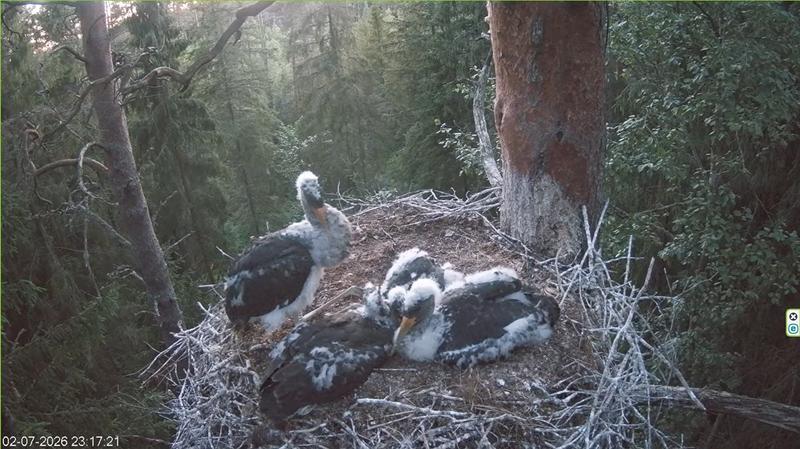
Out of the four chicks, practically only the two older ones ate all the fish.
22:03:38
22:04:26 - 23:14:13 break in the broadcast - we didn't see who ate the rest of the fish
23:17:21
-
marika.solo
- Site Admin
- Posts: 27187
- Joined: 29 Sep 2021, 09:38
Re: Karula National Park 2/ Must toonekurg 4
VIDEO by csillag65 _ thx a lot!
-
marika.solo
- Site Admin
- Posts: 27187
- Joined: 29 Sep 2021, 09:38