June 23
22 -22-20 days old
https://forums.dabasdati.lv/viewtopic.p ... 22#p455722
June 24
23 -23-21 days old
https://forums.dabasdati.lv/viewtopic.p ... 71#p455871
firmly standing https://up.picr.de/51034780yi.png (by Triine)
June 25
24 -24-22 days old
https://forums.dabasdati.lv/viewtopic.p ... 32#p456032
19:41 Meija grabbed the heads of all 3 chicks with her bill... first one of them.
Ogre Municipality (Vidzeme Region)
-
marika.solo
- Site Admin
- Posts: 29298
- Joined: 29 Sep 2021, 09:38
-
marika.solo
- Site Admin
- Posts: 29298
- Joined: 29 Sep 2021, 09:38
Re: Ogre Municipality (Vidzeme Region)
June 26
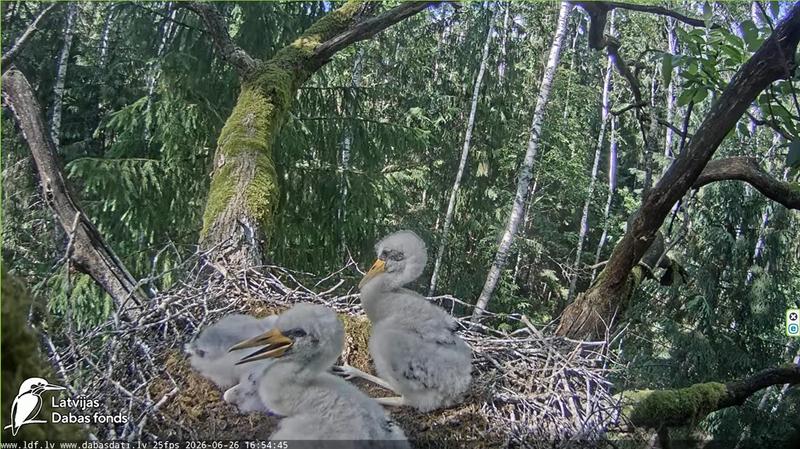
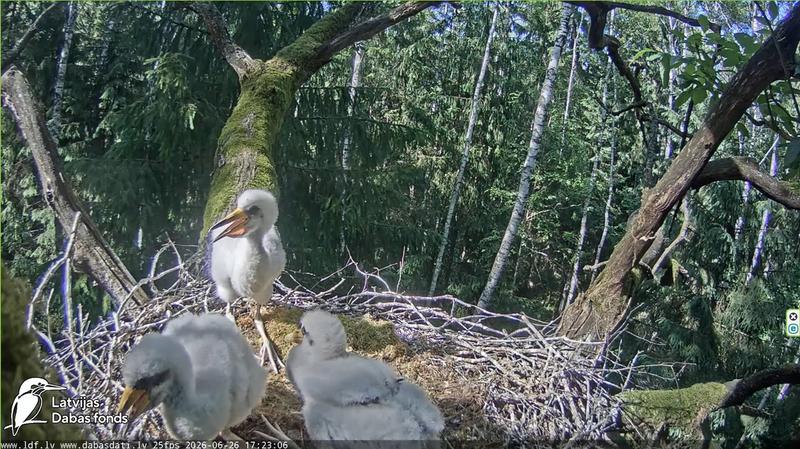
Hello everyone
CHICKS are today: 24 -24-22 days old
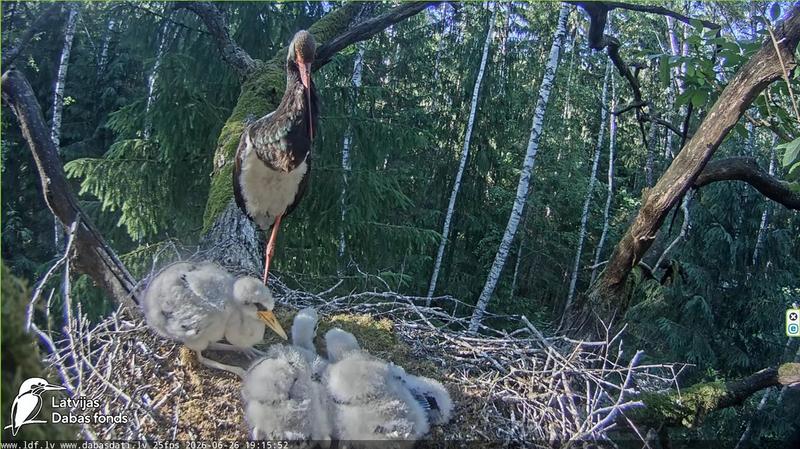
Meija is attacking her chicks.
It is always a hard decision for adult storks – they need to raise strong storklets and they need to eat enough for themselves.
Or it is another reason behind this behaviour?
Hello everyone
CHICKS are today: 24 -24-22 days old
Meija is attacking her chicks.
It is always a hard decision for adult storks – they need to raise strong storklets and they need to eat enough for themselves.
Or it is another reason behind this behaviour?
-
marika.solo
- Site Admin
- Posts: 29298
- Joined: 29 Sep 2021, 09:38
-
marika.solo
- Site Admin
- Posts: 29298
- Joined: 29 Sep 2021, 09:38
Re: Ogre Municipality (Vidzeme Region)
Prepared with help of AI (long "communication")
Based on the observed behaviour of the female (drooping wings, hunched posture, two evenings without feeding the chicks, and chaotic, non‑selective aggression towards them), the situation can be explained by a combination of two biological factors.
1. Acute energy and food shortage
After the amphibian spawning period, frogs move from shallow, open areas into deeper water or dense vegetation. For Black Storks, this means a sudden decrease in accessible prey. During hot weather and when foraging sites dry out, hunting success can drop sharply.
Chicks around one month old have very high energy demands. If the female cannot meet even her own basic metabolic needs (which may be further affected by her previous bill injury), she can reach a state of extreme exhaustion.
Signs: drooping wings, hunched posture, general weakness.
2. Hormonal collapse of parental behaviour
Severe physical stress and hunger activate the HPA stress axis. This causes:
- a sharp rise in corticosterone (the main stress hormone),
- a drop in prolactin, the hormone that maintains parental behaviour.
When prolactin falls below a critical level, the parental instinct switches off and self‑preservation takes priority.
Signs: the female stops responding to begging calls and may show chaotic, non‑purposeful aggression.
This is not a case of intentional brood reduction. It is a stress reaction of an exhausted adult that can no longer cope with the pressure from large, demanding chicks.
Summary
The behaviour is unusual, but it is biologically understandable.
The most likely cause is a combination of:
- acute lack of food,
- severe physical exhaustion,
- hormonal shutdown of parental behaviour.
Based on the observed behaviour of the female (drooping wings, hunched posture, two evenings without feeding the chicks, and chaotic, non‑selective aggression towards them), the situation can be explained by a combination of two biological factors.
1. Acute energy and food shortage
After the amphibian spawning period, frogs move from shallow, open areas into deeper water or dense vegetation. For Black Storks, this means a sudden decrease in accessible prey. During hot weather and when foraging sites dry out, hunting success can drop sharply.
Chicks around one month old have very high energy demands. If the female cannot meet even her own basic metabolic needs (which may be further affected by her previous bill injury), she can reach a state of extreme exhaustion.
Signs: drooping wings, hunched posture, general weakness.
2. Hormonal collapse of parental behaviour
Severe physical stress and hunger activate the HPA stress axis. This causes:
- a sharp rise in corticosterone (the main stress hormone),
- a drop in prolactin, the hormone that maintains parental behaviour.
When prolactin falls below a critical level, the parental instinct switches off and self‑preservation takes priority.
Signs: the female stops responding to begging calls and may show chaotic, non‑purposeful aggression.
This is not a case of intentional brood reduction. It is a stress reaction of an exhausted adult that can no longer cope with the pressure from large, demanding chicks.
Summary
The behaviour is unusual, but it is biologically understandable.
The most likely cause is a combination of:
- acute lack of food,
- severe physical exhaustion,
- hormonal shutdown of parental behaviour.
-
marika.solo
- Site Admin
- Posts: 29298
- Joined: 29 Sep 2021, 09:38
-
marika.solo
- Site Admin
- Posts: 29298
- Joined: 29 Sep 2021, 09:38
Re: Ogre Municipality (Vidzeme Region)
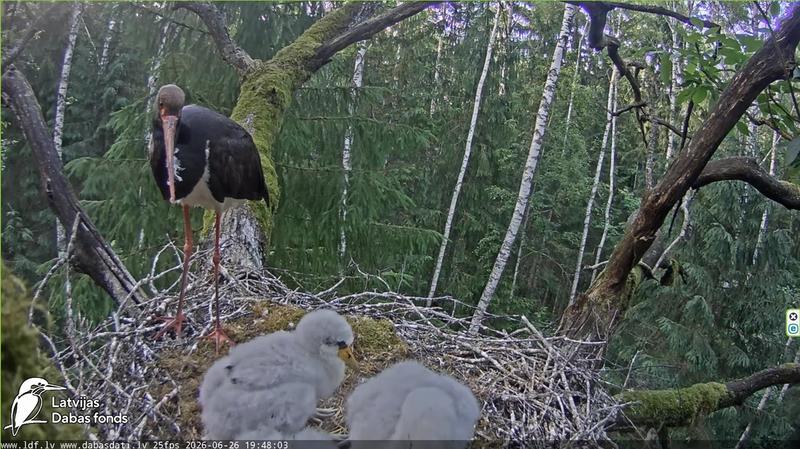
Meija is clearly fighting at the absolute limit of her physical capabilities. The fact that she managed to regurgitate some food for the chicks before the subsequent attack proves that her parental instinct has not entirely died out; however, it is immediately overridden by exhaustion and possibly pain.
The massive loss of feathers and poor quality of the flight feathers during this demanding provisioning phase, as mentioned in the chat, confirm acute metabolic stress. The female's body is likely in a deep energy deficit. The poor condition of her plumage severely compromises her flight capability and foraging efficiency (aerodynamics).
The massive loss of feathers and poor quality of the flight feathers during this demanding provisioning phase, as mentioned in the chat, confirm acute metabolic stress. The female's body is likely in a deep energy deficit. The poor condition of her plumage severely compromises her flight capability and foraging efficiency (aerodynamics).
-
marika.solo
- Site Admin
- Posts: 29298
- Joined: 29 Sep 2021, 09:38
Re: Ogre Municipality (Vidzeme Region)
youtube chat - 7:12 PM@Trīne.11
Sazinājos ar J.Ķuzi.Rīt priekšpusdienā plānota gredzenošana.MS izvērtēs situāciju uz vietas.
I contacted Janis Ķuze. Ringing is planned for tomorrow morning. Maris Strazds will assess the situation on site.
Sazinājos ar J.Ķuzi.Rīt priekšpusdienā plānota gredzenošana.MS izvērtēs situāciju uz vietas.
I contacted Janis Ķuze. Ringing is planned for tomorrow morning. Maris Strazds will assess the situation on site.
-
marika.solo
- Site Admin
- Posts: 29298
- Joined: 29 Sep 2021, 09:38

-
marika.solo
- Site Admin
- Posts: 29298
- Joined: 29 Sep 2021, 09:38
Re: Ogre Municipality (Vidzeme Region)
June 27
Hello everyone
CHICKS are today: 25 -25-23 days old
https://forums.dabasdati.lv/viewtopic.p ... 01#p456401
Meija and her chicks
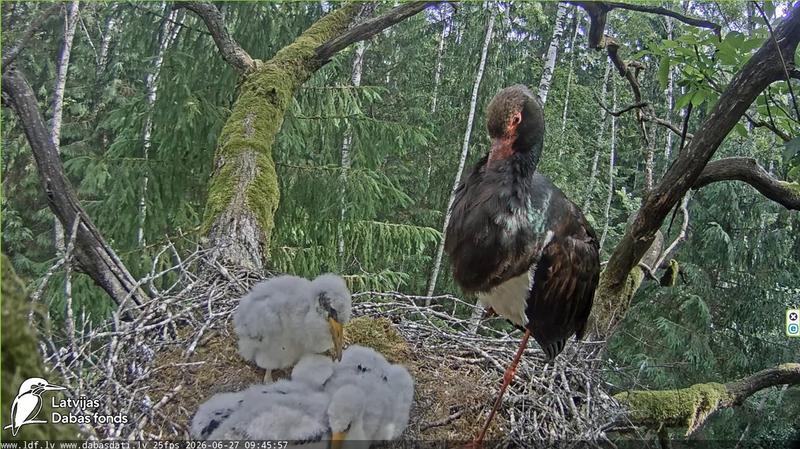
Hello everyone
CHICKS are today: 25 -25-23 days old
https://forums.dabasdati.lv/viewtopic.p ... 01#p456401
Meija and her chicks
-
marika.solo
- Site Admin
- Posts: 29298
- Joined: 29 Sep 2021, 09:38
Re: Ogre Municipality (Vidzeme Region)
I talked with AI - here is the Summary:
Potential causes of behavioural changes in a female Black Stork with a bill injury
This is a very interesting case from the perspective of avian ethology (the science of animal behaviour) and physiology. If the female survived an injury to the base of her bill – especially one caused by a projectile – several factors could explain her current aggressive behaviour towards the 23 to 25-day-old chicks.
Aggressive actions such as plucking at feathers and tugging at the chicks at this stage of development may be driven by three main factors:
1. Chronic pain and mechanical stress (Most likely factor)
A bird’s bill is not just a dead, horny structure. It is a highly sensitive organ, rich in blood vessels and nerve endings (specifically the trigeminal nerve). The area at the base of the bill is also closely connected to the sensitive cere and nasal cavities.
Pain during feeding: At around 24 days of age, chicks no longer beg gently. They aggressively peck at the parent's bill, tug it, and force the adult to regurgitate food. If the female has an old injury, an embedded projectile, or an inflammation at the base of her bill, this mechanical pressure from the chicks can cause sharp, chronic pain.
Defensive reaction: Her "aggression" (plucking, pulling) may not be animosity towards the chicks, but a clear self-defence mechanism against pain. When the chicks approach, she becomes irritable and proactively pushes them away or punishes them to keep them at a distance from the painful area.
2. Lead neurotoxicity (If the projectile was made of lead)
If the projectile contained lead and remained in the tissue or bone, lead slowly and continuously leaches into the bloodstream.
Brain changes: Chronic lead poisoning damages brain structures. In birds, this often leads to a loss of impulse control and abnormal social behaviour.
Disruption of the parental instinct: Lead can literally disrupt hormonal pathways in the brain (such as prolactin, which regulates parental behaviour). The bird is then unable to correctly interpret stimuli from the chicks. Instead of providing care, she reacts with irritability or aggression.
3. Energetical exhaustion and parental investment
Chicks around 24 days old experience a massive growth spurt, and their food consumption rises sharply.
If the female struggles to forage effectively due to her damaged bill, she may be malnourished and exhausted herself.
In nature, the law of self-preservation applies: if the parent's survival is threatened, self-preservation overrides the parental instinct. If she feels she cannot cope with the situation, she may begin to view the chicks as food competitors or a burden. This manifests as aggressive attempts to suppress their demands.
What to look for during observations (For forum discussion):
To help determine whether this behaviour is caused by pain/stress or a neurological issue (lead), try to focus on the following details:
The trigger for the behaviour: Does she attack the chicks "out of nowhere" when they are just resting in the nest? (This would point towards neurological disorientation/poisoning). Or do the attacks occur primarily when they beg for food and touch her bill? (This would point towards pain and mechanical stress).
Symptoms of lead poisoning: Does the female show any other neurological signs? For example: a slightly drooping wing, instability when standing on one leg, unusual head tremors (shaking), or unusual lethargy when she is alone in the nest?
Feeding success: Does she regurgitate food normally, or is the regurgitation process long, painful, and accompanied by head shaking?
Potential causes of behavioural changes in a female Black Stork with a bill injury
This is a very interesting case from the perspective of avian ethology (the science of animal behaviour) and physiology. If the female survived an injury to the base of her bill – especially one caused by a projectile – several factors could explain her current aggressive behaviour towards the 23 to 25-day-old chicks.
Aggressive actions such as plucking at feathers and tugging at the chicks at this stage of development may be driven by three main factors:
1. Chronic pain and mechanical stress (Most likely factor)
A bird’s bill is not just a dead, horny structure. It is a highly sensitive organ, rich in blood vessels and nerve endings (specifically the trigeminal nerve). The area at the base of the bill is also closely connected to the sensitive cere and nasal cavities.
Pain during feeding: At around 24 days of age, chicks no longer beg gently. They aggressively peck at the parent's bill, tug it, and force the adult to regurgitate food. If the female has an old injury, an embedded projectile, or an inflammation at the base of her bill, this mechanical pressure from the chicks can cause sharp, chronic pain.
Defensive reaction: Her "aggression" (plucking, pulling) may not be animosity towards the chicks, but a clear self-defence mechanism against pain. When the chicks approach, she becomes irritable and proactively pushes them away or punishes them to keep them at a distance from the painful area.
2. Lead neurotoxicity (If the projectile was made of lead)
If the projectile contained lead and remained in the tissue or bone, lead slowly and continuously leaches into the bloodstream.
Brain changes: Chronic lead poisoning damages brain structures. In birds, this often leads to a loss of impulse control and abnormal social behaviour.
Disruption of the parental instinct: Lead can literally disrupt hormonal pathways in the brain (such as prolactin, which regulates parental behaviour). The bird is then unable to correctly interpret stimuli from the chicks. Instead of providing care, she reacts with irritability or aggression.
3. Energetical exhaustion and parental investment
Chicks around 24 days old experience a massive growth spurt, and their food consumption rises sharply.
If the female struggles to forage effectively due to her damaged bill, she may be malnourished and exhausted herself.
In nature, the law of self-preservation applies: if the parent's survival is threatened, self-preservation overrides the parental instinct. If she feels she cannot cope with the situation, she may begin to view the chicks as food competitors or a burden. This manifests as aggressive attempts to suppress their demands.
What to look for during observations (For forum discussion):
To help determine whether this behaviour is caused by pain/stress or a neurological issue (lead), try to focus on the following details:
The trigger for the behaviour: Does she attack the chicks "out of nowhere" when they are just resting in the nest? (This would point towards neurological disorientation/poisoning). Or do the attacks occur primarily when they beg for food and touch her bill? (This would point towards pain and mechanical stress).
Symptoms of lead poisoning: Does the female show any other neurological signs? For example: a slightly drooping wing, instability when standing on one leg, unusual head tremors (shaking), or unusual lethargy when she is alone in the nest?
Feeding success: Does she regurgitate food normally, or is the regurgitation process long, painful, and accompanied by head shaking?