ARVO (2025) - subadult male, hatched in Karula NP, former Eedi's nest

Post Reply
marika.solo
Site Admin
Posts: 23285
Joined: 29 Sep 2021, 09:38

ARVO (2025) - subadult male, hatched in Karula NP, former Eedi's nest

Post by marika.solo »

IN PREPARATION

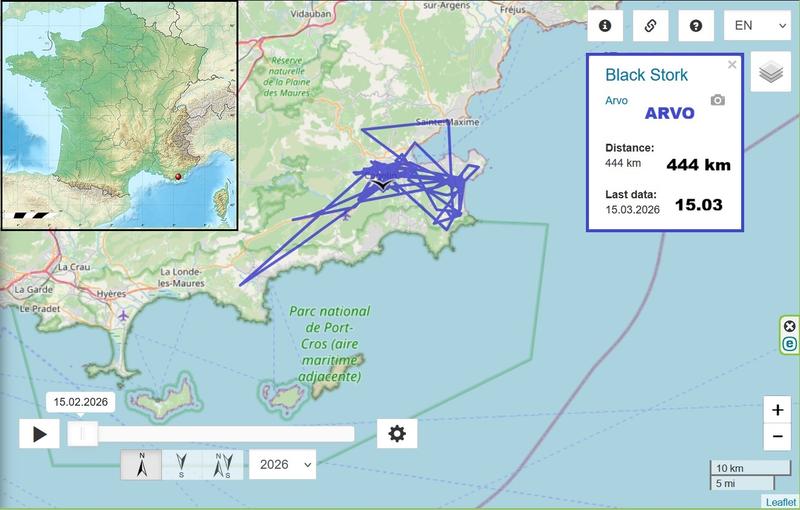
Spring Birdmap: Starts 15 February. (Autumn data ends 14 February.) Publication may follow 1–2 weeks later. Storks appear only after reaching GSM coverage during a data session.

Migration Tracking of ARVO - 2CY
CY (Calendar Year) counts the calendar years a bird has lived in, starting with 1CY for its hatch year and increasing every January 1st.

Bird Profile:
  • Sex: Male (according to measurements)
  • Age: Subadult - 2CY (hatched 2025)
  • Origin: Karula National Park, former Eedi's nest
  • Wintering Ground: Camargue, France (Rhône River Delta)
  • 1st spring migration (tagged on 14.07.2025)
Ringing data:
I have both the ornithological and colour ring numbers, but I’ve been asked to handle them with caution (e.g. to prevent misuse in false reports).
If you spot a ringed stork in the wild, on a webcam, or in the media, please contact me via a Private Message.


AUTUMN/WINTER MIGRATION 2025/2026: viewtopic.php?f=170&t=319
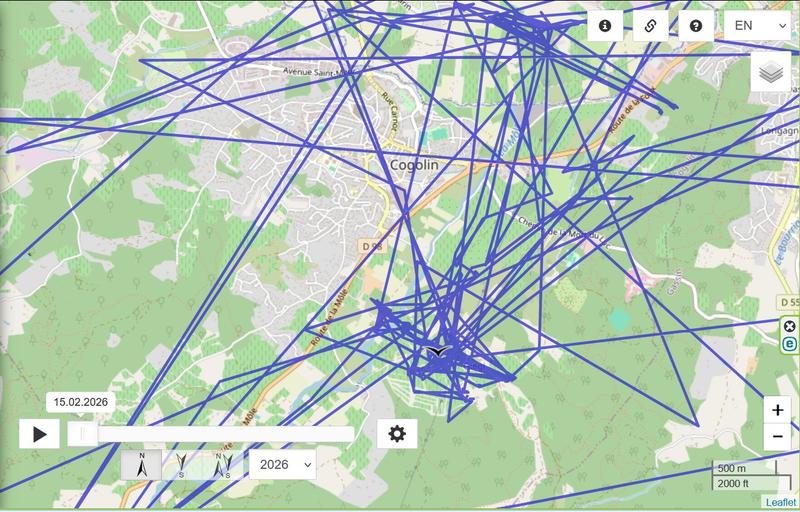
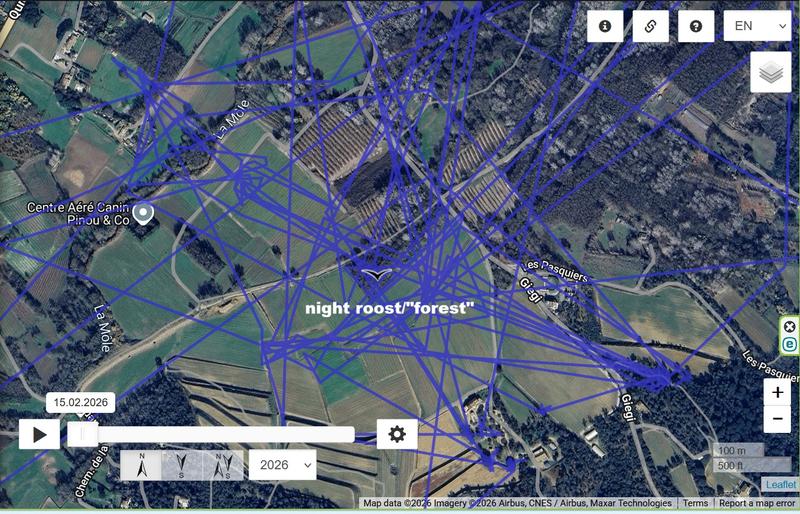
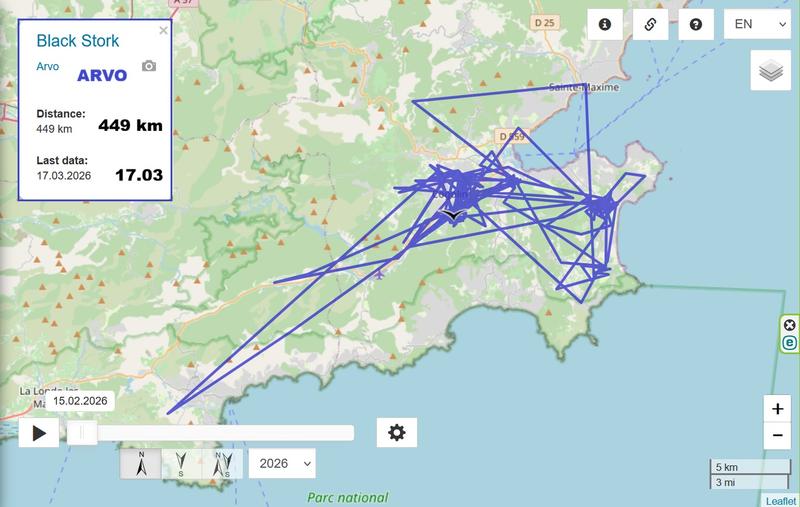
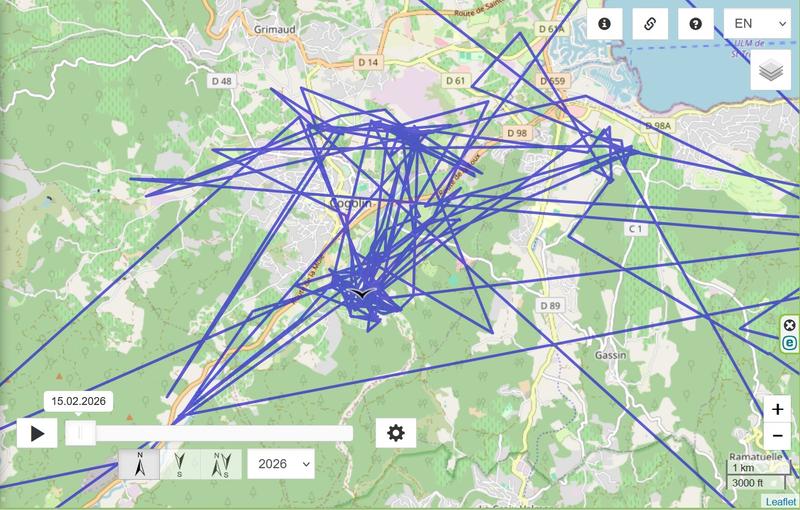
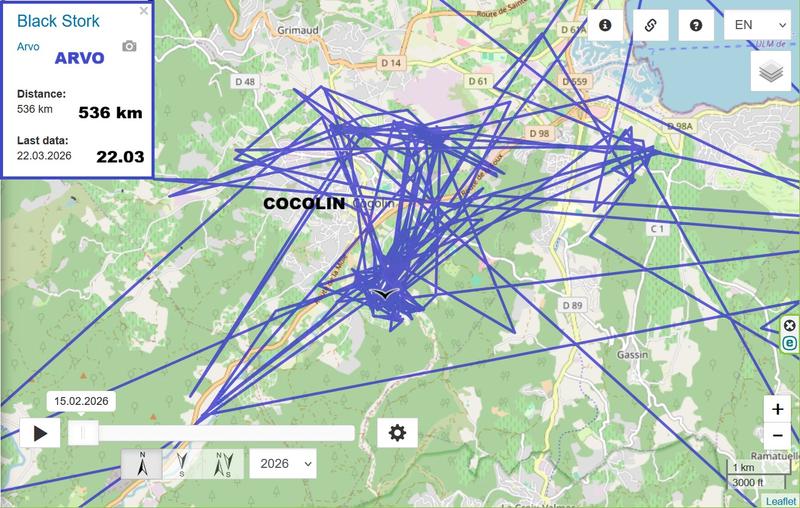
Arvo has been enjoying the marshlands and rice fields of the Camargue (France) since 28 September
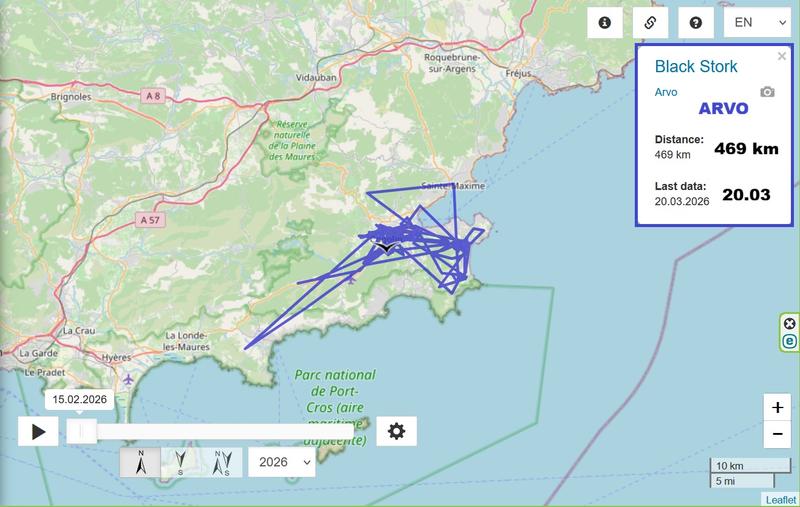
We are watching to see if he stays in France for the summer or starts a journey back north.

Spring Birdmap 2026: since
FIRST BIRDMAP UPDATE FOR ARVO: on

Spring migration 2026
Data source:

0/ Departure/migration started on:
.
.
.

Continuation:
News (if available): viewtopic.php?f=85&t=336
Autumn migration 2026:
marika.solo
Site Admin
Posts: 23285
Joined: 29 Sep 2021, 09:38

Re: ARVO (2025) - subadult male, hatched in Karula NP, former Eedi's nest

Post by marika.solo »

ARVO

birdmap description: (2025)
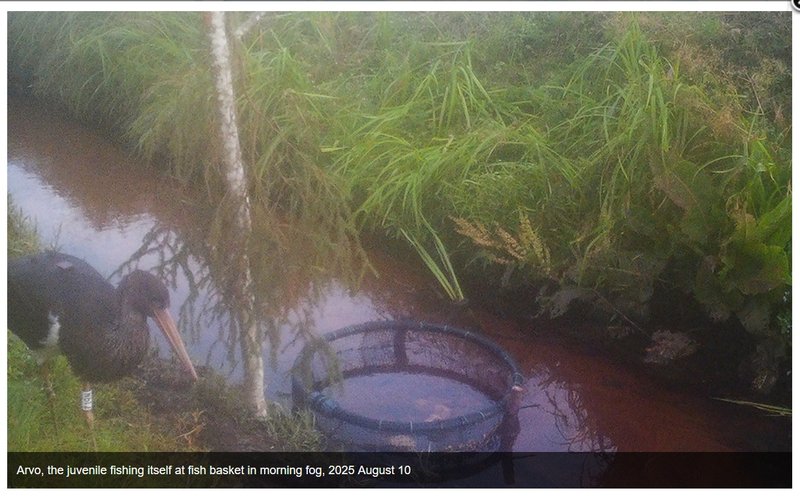
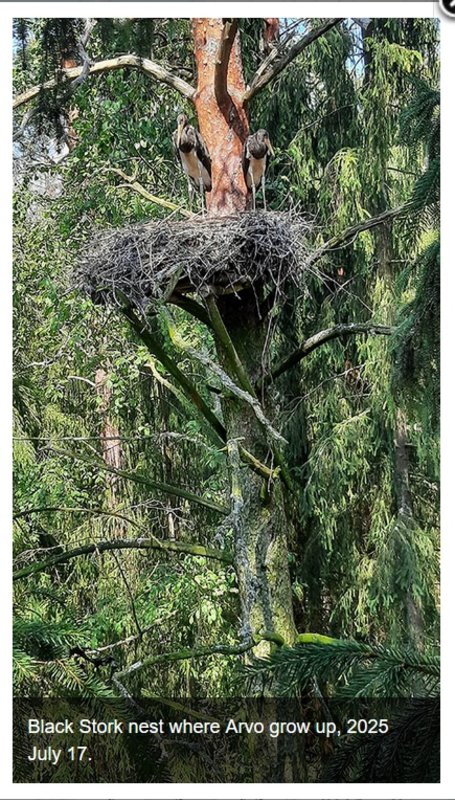
Young Black Stork from Karula National Park. In 2025, there were two chicks in the nest, one of which (the bigger one, named Arvo) we put a tracking device on. According to the measurements, he is a male. There are no tags on the parent birds here. This brood was fed additionally throughout the chicks' stay in the nest (May-August). We only kept a gap during the summer high water, when it was not possible to avoid flooding the fish basket. Arvo went further south from the nest for the first time on August 14, about 15 km away to the Mustjõe floodplain. But he returned to the nest and also to the fish basket twice more. On August 17, he finally left the nesting site, but remained in the Mustjõe and later Koiva river floodplains until August 24. We continued to feed them on the banks of the Mustjõgi River. Other Black Storks and herons also experienced pre-migration fattening. Arvo's migration took him to Belarus and Poland. But from there, he headed west-southwest through the Czech Republic and Austria. A rather unusual migration route.
Arvo stays in Switzerland for a longer period, three weeks. He will then travel to the Rhone River Delta in southern France. This is one of the few wintering areas for Black Storks in France.


PHOTOS (birdmap)

2 chick on the nest
Image

Image
Post Reply

Return to “Estonia”